

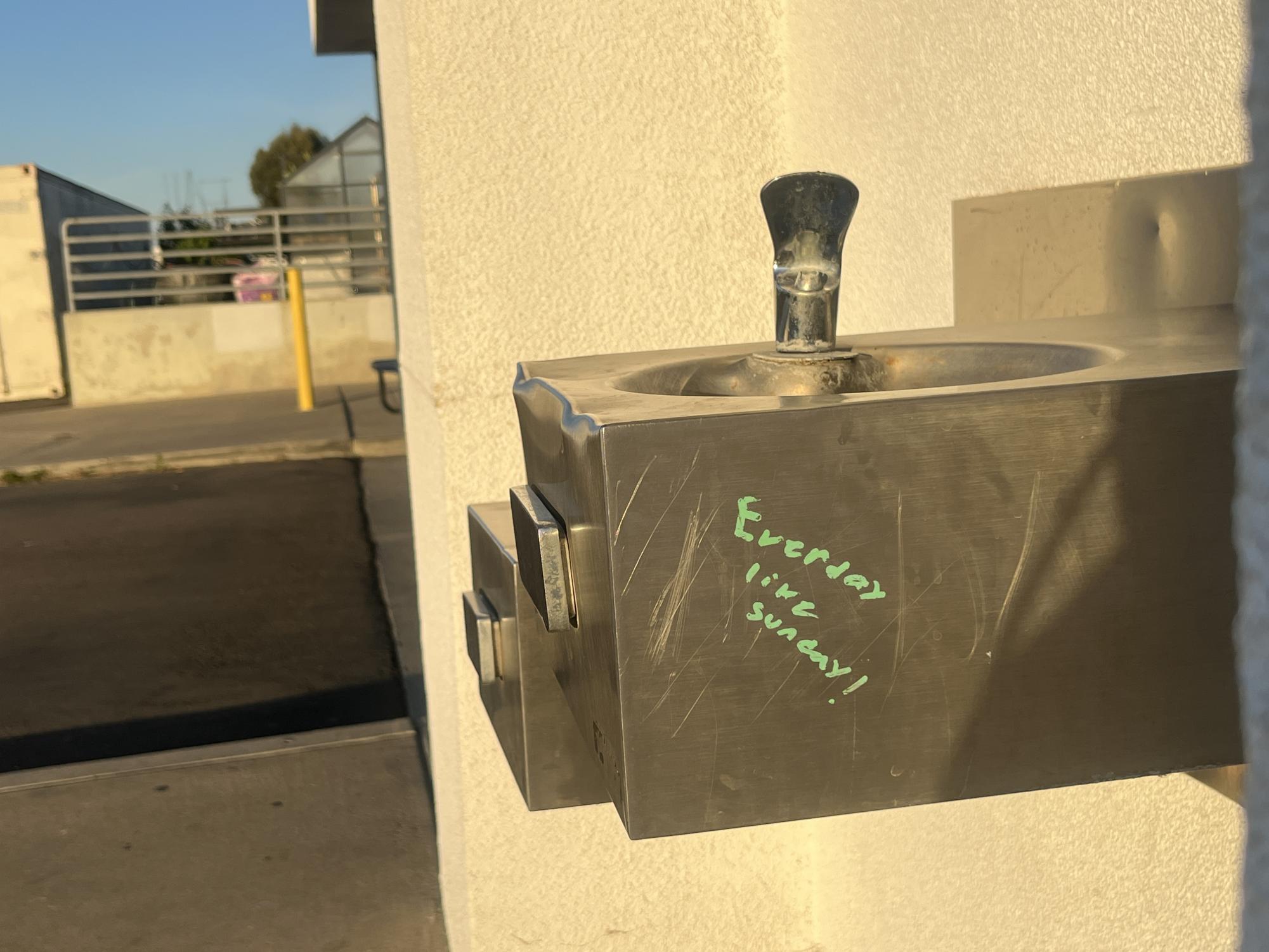
Walking through the BVH campus–specifically hallways and restrooms–you are more than likely to find small acts of vandalism, typically in permanent marker. One might be inclined to brush this off as “kids being kids” or “punk behavior,” and for good reason, but it should not be associated with nor should it cloud someone’s view of true graffiti art.
Oxford Languages defines graffiti as “writing or drawings scribbled, scratched, or sprayed illicitly on a wall or other surface in a public place.” Just the word “illicitly” built into graffiti’s definition signifies the negative connotation around it. The association of graffiti with vandalism, gangs and crime leads many to view it as inherently bad. However, graffiti can be a beautiful and extremely meaningful form of art–real art. Sophomore Nataly Garcia explains her definition of “real art” and what falls under it.
“[Real art is] anything that is created with genuine passion or created just for the sake of it being made–if it is created to tell a story or to push a message that is not purely propaganda. If it is anything related to passion or emotion and [it is] human, then I would consider it art,” Garcia said. “If it were not ever to be seen by anyone except the creator, and it could still have a meaning, it can be considered art.”
The typical consensus is that real art is both human and has meaning. This is one of many concepts taught in the Design and Mixed Media classes. Teacher of Design and Mixed Media Andrew Rae comments on his perspective of real art.
“One of the artists that we are studying right now–John Baldessari–says if the artist claims it’s art, it is art. I think that is true but I think that art should have a purpose, a meaning and it should have something that you are striving for,” Rae said.
Though graffiti is often vandalism, it is not always. Street art in general is extremely meaningful, and also practiced legally despite the atmosphere it is normally associated with. Math and special education teacher Andrea Romero describes her experience with street art.
“I grew up in Tijuana, so I grew up surrounded by graffiti and street art. I have been painting since I was a senior in high school. I took an AP art studio class when I was a senior at BVH and I started painting murals in 2023. The first time that I painted on a wall was at Chicano Park and it was a paintbrush mural,” Romero said.
Using the way both Garcia and Rae explain “real art,” graffiti more than meets the criteria. While vandalism can cause annoyance and frustration, art is art regardless of the legality. Romero explains this perfectly.
“Street art is also a form of activism. I really love when street art has a message. There is graffiti, there is gang graffiti but then there is also street art that is more intentional and spreads a message. I grew up seeing walls covered in art my whole life, and to me it was just art. It did not matter if it was graffiti or not,” Romero said.
The illegality of graffiti can also contribute to the meaning behind it. Romero explains her growing appreciation for street art when it has a message—but that can often be found in the form of protest through vandalism.
“I grew up in Santa Fe, New Mexico. In the town square there is a big statue. At the bottom it says ‘this obelisk was raised in honor of all of the brave American warriors who fought against the Savage Indians.’ It is not at all okay to call people savage Indians and for it to be a public monument that was put there by the government was an issue,” Rae said. “In the 1970s, a Native American just chiseled out the word savage. The fact that that was still there and the word savage was not, but you knew that it was, it had this purpose for and was significant to the community.”
Rebellion and vandalism can add to the message behind certain pieces of street art, though it should not become a stereotype. Street art also has a cultural significance–especially considering the large Mexican population at and around BVH. Romero explains this, in relation to her previously mentioned childhood.
“I feel like it is also part of Mexican culture to want to be surrounded by color everywhere that we look. I want to see [things] covered in art, covered in color and graffiti is one of those things. Street art, murals [are some] of those things,” Romero said. “The culture of murals is a very Chicano, very Mexican rooted thing and we have been painting murals since we started.”


Elizabeth Hoffman • Dec 10, 2025 at 3:06 pm
I love this! Hearing about the background of graffiti was super interesting.